회사에서 만든 아이디어, 직무발명인가요 개인발명인가요? 판단할 때 보는 기준
회사에 다니면서 만든 아이디어라고 해서 모두 회사의 직무발명이 되는 것도, 퇴근 후 집에서 만든 아이디어라고 해서 자동으로 개인발명이 되는 것도 아닙니다. 회사의 업무범위, 발명자의 현재·과거 직무, 발명이 만들어진 경위와 회사의 직무발명 규정을 중심으로 실제 판단 포인트를 사례와 함께 설명합니다.
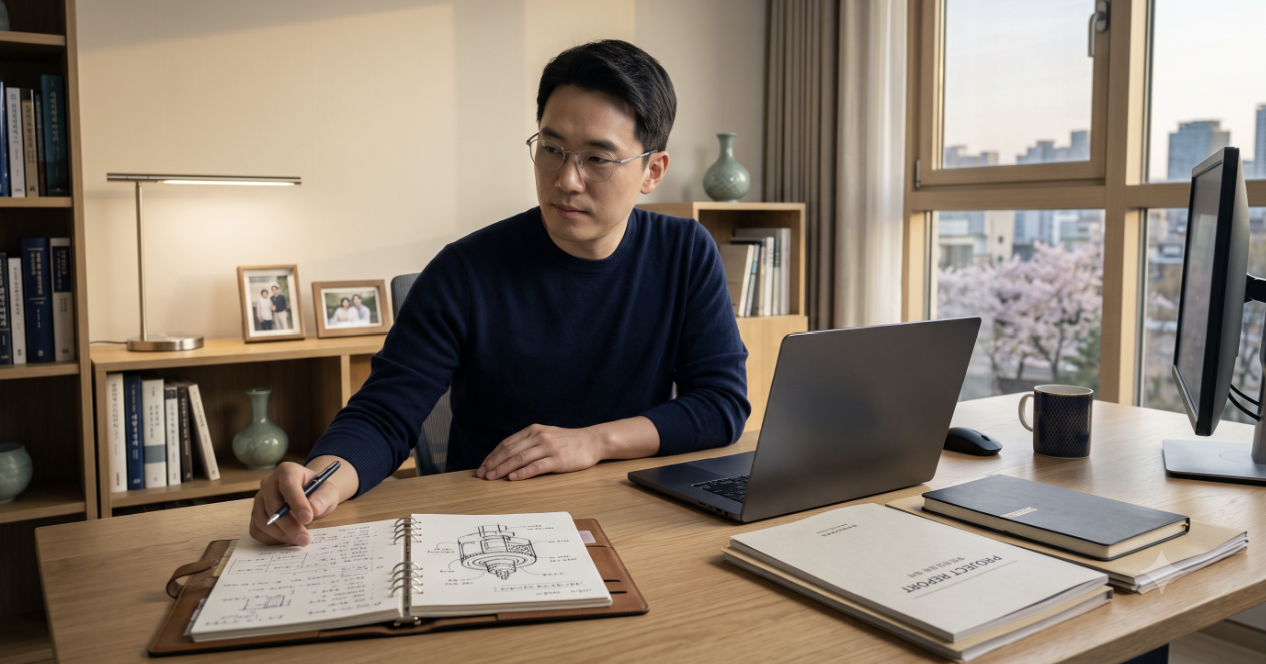
회사에 다니면서 만든 아이디어라고 해서 무조건 회사 것이 되는 것은 아닙니다.
반대로 퇴근 후 집에서 혼자 생각했고 개인 컴퓨터로 정리했다고 해서 자동으로 개인발명이 되는 것도 아닙니다.
직무발명인지 개인발명인지 판단할 때는 단순히 언제, 어디에서 만들었는가보다 그 발명이 회사의 업무범위에 속하는지, 그리고 그 발명을 하게 된 행위가 본인의 현재 또는 과거 직무와 관련되는지를 함께 살펴보는 것이 중요합니다.
핵심 질문
“회사에 재직하고 있었나?” 하나가 아니라
회사 업무범위 + 나의 현재·과거 직무 + 실제 발명의 내용과 만들어진 경위를 함께 봐야 합니다.
직무발명이란 무엇인가요?
발명진흥법상 직무발명은 종업원, 법인의 임원 또는 공무원이 직무와 관련하여 한 발명 중에서,
- 그 발명의 성질이 사용자 또는 회사의 업무범위에 속하고
- 그 발명을 하게 된 행위가 종업원의 현재 또는 과거 직무에 속하는
발명을 말합니다.
따라서 회사 직원이 만들었다는 이유만으로 모든 발명이 직무발명이 되는 것은 아닙니다.
예를 들어 반도체 장비회사의 공정개발 엔지니어가 담당 공정을 개선하는 새로운 장치구조를 만들었다면 직무와의 관련성이 상당히 높을 수 있습니다.
하지만 같은 직원이 개인 취미인 캠핑을 하다가 기존 업무와 전혀 관계없는 휴대용 조리기구 구조를 발명했다면 판단은 달라질 수 있습니다.
가장 먼저 보는 기준은 무엇일까요?
실무적으로는 적어도 다음 세 가지를 분리해서 보는 것이 좋습니다.
| 판단요소 | 확인할 내용 |
|---|---|
| 회사의 업무범위 | 회사가 실제로 영위하는 사업·제품·기술과 발명이 관련되는가 |
| 발명자의 직무범위 | 현재 또는 과거 담당업무와 발명을 만든 행위가 관련되는가 |
| 구체적인 발명 경위 | 업무지시, R&D 프로젝트, 회사자료·장비, 동료와의 협업 등이 어떤 역할을 했는가 |
여기서 세 번째 요소인 발명 경위는 매우 중요하지만, 단순히 하나의 사실만으로 결론을 내리는 방식은 피하는 것이 좋습니다.
집에서 만들었으면 개인발명 아닌가요?
많이 묻는 질문입니다.
장소만으로는 결정하기 어렵습니다.
예를 들어 회사에서 신제품의 발열 문제를 해결하는 업무를 맡은 엔지니어가 있다고 가정해보겠습니다.
그 직원이 퇴근 후 집에서 샤워를 하다가 새로운 냉각구조를 떠올렸고, 개인 노트에 스케치를 했다고 해서 그 발명이 자동으로 회사와 무관한 개인발명이 되는 것은 아닙니다.
발명의 출발점이 된 문제가 회사 업무에서 주어진 문제이고, 발명의 내용 역시 본인이 담당하던 기술개발과 직접 연결된다면 직무발명 문제가 생길 수 있습니다.
자주 하는 오해
“회사에서 만들면 회사 것, 집에서 만들면 내 것”이라는 공식은 없습니다.
발명의 장소와 시간은 사실관계를 판단하는 자료가 될 수 있지만, 핵심 법적 기준 자체를 대체하지는 않습니다.
회사 컴퓨터나 장비를 썼으면 무조건 직무발명인가요?
이것도 자동으로 결론이 나지는 않습니다.
회사 장비, 실험시설, 연구비 또는 자료를 사용했다는 사실은 회사와 발명의 관계를 보여주는 중요한 사정이 될 수 있습니다.
그러나 법에서 정한 핵심 판단에는 여전히 회사의 업무범위와 발명자의 직무 관련성이 들어갑니다.
반대로 개인 컴퓨터만 사용했다고 해서 직무관련성이 없어지는 것도 아닙니다.
중요한 것은 여러 사실을 묶어서 보는 것입니다.
확인해볼 사실
- 발명의 문제를 회사 프로젝트에서 처음 접했는가
- 상사나 회사로부터 해결과제를 부여받았는가
- 연구개발 업무가 본인의 직무기술서에 포함되어 있는가
- 회사의 기존 제품·설계·실험자료를 이용했는가
- 동료 직원과 공동으로 발명했는가
- 회사 비용으로 시험이나 개발을 진행했는가
- 현재 직무뿐 아니라 과거 담당직무와 연결되는가
이 중 하나만 있다고 무조건 직무발명이라고 단정하거나, 하나가 없다고 무조건 개인발명이라고 단정해서는 안 됩니다.
사례 1 — 개발자가 주말에 집에서 개선안을 만든 경우
A씨는 의료기기 회사의 기구설계 담당자입니다.
회사에서 기존 제품의 손잡이 결합부가 쉽게 마모되는 문제가 계속 발생했고, A씨는 해당 문제를 개선하는 업무를 맡고 있었습니다.
주말에 집에서 개인 노트북을 사용하다가 새로운 결합구조를 생각해 냈습니다.
회사 컴퓨터를 사용하지 않았고 회사 건물 안에서 발명한 것도 아닙니다.
그렇더라도 발명의 대상과 해결문제가 회사 제품 및 A씨의 설계업무와 직접 연결되어 있다면 단순히 “주말에 집에서 만들었다”는 이유만으로 개인발명이라고 보기 어려울 수 있습니다.
사례 2 — 회사원인데 전혀 다른 분야의 아이디어를 만든 경우
B씨는 화장품 회사의 회계팀 직원입니다.
평소 자전거를 즐기다가 개인적으로 자전거 가방의 잠금구조를 개선하는 아이디어를 만들었습니다.
회사 사업과 자전거용품 사이에 특별한 관련성이 없고, B씨의 회계업무와도 해당 발명을 만들어낸 행위가 연결되지 않는다고 가정해보겠습니다.
이 경우에는 단순히 B씨가 어느 회사의 종업원이라는 이유만으로 직무발명이라고 보기는 어려울 가능성이 있습니다.
즉 고용관계가 있다는 사실만으로 충분하지 않습니다.
사례 3 — 본업과 비슷하지만 회사는 그 사업을 하지 않는 경우
가장 애매한 경우 중 하나입니다.
C씨는 산업용 카메라 관련 소프트웨어 개발자입니다.
개인적으로 반려동물 행동을 분석하는 영상처리 알고리즘을 만들었습니다.
알고리즘 기술은 본인의 전문분야와 비슷하지만 회사는 반려동물 사업을 전혀 하지 않는다고 가정해보겠습니다.
이때는 단순히 “코딩이 본업이니까 직무발명”이라고 끝낼 수 없습니다.
회사의 실제 업무범위, C씨에게 부여된 연구·개발 직무의 구체적인 범위, 해당 알고리즘을 만들게 된 과정과 회사 기술의 활용 여부 등을 더 자세히 확인해야 합니다.
SKY POINT
직무발명 판단은 업종명이나 직함만 비교하는 작업이 아닙니다.
실제 사업범위와 실제 직무, 그리고 발명이 어떤 문제에서 출발해 어떤 과정을 거쳐 완성되었는지를 연결해서 보는 것이 중요합니다.
퇴사하고 나서 특허출원하면 개인발명이 되나요?
퇴사일만으로 직무발명 여부가 바뀌는 것은 아닙니다.
법상 직무발명의 정의에는 발명을 하게 된 행위가 종업원의 현재 또는 과거의 직무에 속하는 경우도 포함됩니다.
따라서 재직 중 사실상 발명이 완성되었는데 퇴사 후 개인 명의로 출원했다고 해서 자동으로 개인발명으로 바뀐다고 생각하면 위험합니다.
반대로 퇴사 후 새롭게 독립적인 연구와 개발을 통해 전혀 다른 발명을 완성했다면 사실관계가 달라질 수 있습니다.
결국 중요한 것은 특허출원일만이 아니라 발명이 언제, 어떻게 완성되었는가입니다.
회사 직무발명 규정도 확인해야 합니다
직무발명 해당 여부와 별도로 매우 중요한 것이 회사의 계약과 근무규정입니다.
회사에는 다음과 같은 문서가 있을 수 있습니다.
- 근로계약서
- 취업규칙
- 지식재산권 관리규정
- 직무발명 보상규정
- 연구개발 관리규정
- 별도의 발명신고·승계 규정
현재 발명진흥법에서는 직무발명에 대한 권리를 회사에 승계하도록 하는 계약이나 근무규정이 미리 마련된 경우의 권리승계 구조를 규정하고 있습니다.
따라서 “이 발명이 직무발명인가?”와 함께 반드시 확인해야 할 두 번째 질문은 다음입니다.
“우리 회사에 유효한 직무발명 사전승계 규정이 있는가?”
직무발명이라는 판단과 실제 권리가 누구에게 귀속되는지는 서로 연결되어 있지만 완전히 같은 질문은 아닙니다.
직원이 회사에 알려야 하나요?
직무발명을 완성한 경우에는 법에 따른 발명완성사실 통지 절차가 문제될 수 있습니다.
한국발명진흥회의 직무발명 공식 안내도 종업원이 직무발명을 완성하면 지체 없이 사용자에게 문서로 통지하는 절차를 설명하고 있습니다.
회사에 별도의 직무발명 신고서가 있다면 그 양식을 확인하는 것이 좋습니다.
특히 다음과 같은 상황에서 임의로 본인 명의 출원을 먼저 해버리는 것은 분쟁을 키울 수 있습니다.
- 회사 프로젝트와 직접 관련된 발명
- 여러 직원이 함께 만든 발명
- 회사가 이미 내부 발명신고 절차를 운영하고 있는 경우
- 회사의 연구비·장비·데이터가 중요한 역할을 한 경우
직무발명이면 회사가 그냥 가져가고 끝인가요?
그렇지 않습니다.
직무발명 제도에는 권리승계와 함께 종업원에 대한 정당한 보상이라는 구조가 있습니다.
발명진흥법은 직무발명에 관한 권리나 특허권 등을 계약 또는 근무규정에 따라 회사가 승계하는 경우 종업원이 정당한 보상을 받을 권리를 규정하고 있습니다.
회사 입장에서도 단순히 “모든 특허는 회사 것”이라는 문구만 만들어 두는 것으로 충분하다고 보기 어렵습니다.
보상규정, 기준, 절차와 실제 운영이 함께 중요합니다.
직무발명이 아닌 발명까지 회사가 미리 모두 가져갈 수 있나요?
직무발명 여부를 구분해야 하는 이유가 바로 여기에 있습니다.
직원의 모든 창작이나 아이디어가 회사 권리가 되는 것은 아닙니다.
회사의 사업과 직무와 무관한 개인발명까지 아무 제한 없이 회사가 가져가는 방식으로 이해해서는 안 됩니다.
따라서 근로계약서에 “재직 중 발생하는 모든 아이디어는 회사 소유”와 같은 문구가 있다고 하더라도 실제 법적 효과는 발명의 성격과 관련 법규를 함께 검토해야 합니다.
공동으로 만들었다면 더 복잡해질 수 있습니다
직무발명은 혼자 만드는 경우만 있는 것이 아닙니다.
예를 들어 회사 직원 A와 외부 대학 연구자 B가 공동으로 하나의 발명을 완성했다면,
- 실제 발명자가 누구인지
- 각자가 발명의 기술적 특징 형성에 어느 정도 기여했는지
- A의 부분이 직무발명에 해당하는지
- 회사가 A의 권리 지분을 승계하는지
- 대학 또는 산학협력단 규정은 무엇인지
등을 함께 확인해야 할 수 있습니다.
단순히 프로젝트 책임자 이름을 발명자로 넣거나, 아이디어 회의에 참석했다는 이유만으로 모두를 공동발명자로 적는 것은 별개의 문제를 만들 수 있습니다.
개인적으로 먼저 출원하기 전에 무엇을 확인해야 할까요?
회사와 관련될 가능성이 조금이라도 있다면 다음 자료를 먼저 정리해보는 것이 좋습니다.
1. 발명의 핵심 내용
무엇이 새로운 기술적 특징인지 한두 문장으로 정리합니다.
2. 회사의 실제 사업범위
홈페이지에 적힌 업종명만이 아니라 현재 제품, 연구개발 방향, 진행 중인 프로젝트까지 확인합니다.
3. 본인의 현재·과거 직무
직무기술서, 부서, 프로젝트 역할과 발명의 관계를 확인합니다.
4. 발명이 만들어진 시간표
언제 문제를 알게 되었고, 언제 핵심 아이디어를 만들었으며, 언제 구체적인 구조가 완성되었는지 기록합니다.
5. 회사 자원의 사용 여부
장비, 소프트웨어, 실험자료, 회사 데이터, 비용, 연구인력의 사용 여부를 정리합니다.
6. 직무발명 규정
근로계약서와 사내 규정에서 발명신고 및 권리승계 절차를 확인합니다.
7. 공동발명자 가능성
동료가 단순히 업무를 도와준 것인지, 실제 발명의 핵심 기술구성 창출에 참여했는지 구분합니다.
이런 경우에는 출원 전에 특히 조심하는 것이 좋습니다
출원 전 확인
아래 상황이라면 “내 아이디어니까 일단 개인 명의로 출원하고 나중에 생각하자”는 접근은 피하는 것이 좋습니다.
- 회사에서 해결하던 기술문제를 그대로 출원하려는 경우
- 퇴사 직전 또는 퇴사 직후 출원을 준비하는 경우
- 회사와 같은 제품 또는 시장을 대상으로 하는 경우
- 회사 R&D 자료나 실험결과를 이용한 경우
- 동료 직원과 함께 아이디어를 만든 경우
- 회사 직무발명 규정이 존재하지만 신고하지 않은 경우
- 개인사업 또는 새 회사에서 기존 회사 기술을 활용하려는 경우
직무발명뿐 아니라 영업비밀, 비밀유지의무, 공동발명 등의 문제가 동시에 연결될 수 있기 때문입니다.
회사 입장에서도 미리 정리할 필요가 있습니다
직무발명 문제는 직원만의 문제가 아닙니다.
회사가 규정을 제대로 갖추지 않으면 핵심 기술을 누가 소유하는지 나중에 불명확해질 수 있고, 투자·기술이전·M&A·IPO 실사 과정에서 권리귀속 문제가 발견될 수도 있습니다.
회사에서는 적어도 다음 체계를 검토할 필요가 있습니다.
- 직무발명 신고 절차
- 권리 승계 여부 결정 절차
- 발명자 확인
- 정당한 보상규정
- 공동연구 발명 처리
- 퇴사자 발명 관리
- 특허를 출원하지 않는 경우의 처리
- 연구자료와 영업비밀 관리
특허출원 건수보다 핵심 기술의 권리관계가 처음부터 명확한지가 더 중요한 경우도 많습니다.
SKY에서는 무엇부터 확인하나요?
직무발명 여부를 검토할 때는 “회사에서 만들었나요?”라는 질문 하나로 판단하기보다 다음 순서로 사실관계를 구조화하는 것이 좋습니다.
- 발명의 핵심 기술내용
- 회사의 실제 업무범위
- 발명자의 현재·과거 직무
- 발명 아이디어가 나온 계기와 완성시점
- 회사 자원·자료·인력의 이용관계
- 회사 직무발명·지식재산 규정
- 회사의 권리승계 절차
- 공동발명자 또는 외부기관의 존재
- 이미 이루어진 공개·출원·퇴사 등 시점
이 과정을 먼저 정리하면 “직무발명인가 아닌가”뿐 아니라 누가 어떤 권리를 가지고, 어떤 절차를 먼저 밟아야 하는가까지 보다 정확하게 검토할 수 있습니다.
직무발명과 함께 신규 발명·특허구조를 검토해야 하는 기업이라면 SKY의 IP-R&D · 신기술 발굴 서비스도 참고할 수 있습니다.
핵심 정리
회사에 재직 중이었다는 이유만으로 모든 발명이 회사의 직무발명이 되는 것은 아닙니다.
또한 집에서 만들었다거나 개인 컴퓨터로 작업했다는 이유만으로 자동으로 개인발명이 되는 것도 아닙니다.
중요한 것은:
- 회사의 업무범위
- 발명자의 현재 또는 과거 직무
- 실제 발명의 기술적 내용
- 발명이 만들어진 경위
- 회사의 직무발명 및 권리승계 규정
을 함께 보는 것입니다.
특히 퇴사, 개인 명의 출원, 공동발명, 회사 자료 사용이 얽힌 사건은 나중에 되돌리기보다 출원 전에 권리관계를 먼저 정리하는 편이 안전합니다.
공식 출처
지식재산처 — 직무발명 보상제도 개요
공식 원문 보기 →
한국발명진흥회 — 직무발명제도 관련 발명진흥법 및 시행령
공식 원문 보기 →
국가법령정보센터 — 발명진흥법 제13조(직무발명의 권리승계)
공식 원문 보기 →
English Version
An invention does not automatically belong to the employer simply because it was created while the inventor was employed.
Conversely, an invention is not automatically personal merely because the employee conceived it at home, after working hours or on a privately owned computer.
Under Korean employee-invention law, the more important questions include whether the invention falls within the employer’s business scope and whether the activities that led to the invention fall within the employee’s current or former duties.
Key question
Do not ask only, “Was I employed when I made it?”
The analysis should connect the employer’s business scope, the employee’s current or former duties, and the actual content and development history of the invention.
What is an employee invention in Korea?
Under Korea’s Invention Promotion Act, an employee invention generally concerns an invention made by an employee, corporate officer or public official where:
- the nature of the invention falls within the business scope of the employer, and
- the activities that led to the invention fall within the employee’s current or former duties.
Employment status alone is therefore not sufficient.
For example, a process engineer at a semiconductor-equipment company who develops a new structure to improve the production process assigned to that engineer may have a strong connection to the employee’s duties.
The analysis may be very different if the same employee independently develops a camping accessory unrelated to the employer’s products, technology or business.
What factors should be reviewed first?
A practical review usually separates at least three issues.
| Factor | What to examine |
|---|---|
| Employer’s business scope | Whether the invention relates to the company’s actual products, business or technology |
| Employee’s duties | Whether the activities that produced the invention relate to the employee’s current or former responsibilities |
| Development history | The role of assignments, R&D projects, company equipment, internal information and collaboration |
The third category can provide important evidence, but no single fact should automatically replace the statutory analysis.
If I invented it at home, isn’t it automatically mine?
No.
Assume an engineer has been assigned to solve a heat-management problem in a new company product.
The engineer goes home, thinks about the problem that evening and sketches a new cooling structure in a personal notebook.
The fact that the idea was written down at home does not necessarily disconnect it from the engineer’s employment duties.
If the technical problem arose from the company assignment and the solution directly concerns the engineer’s development role, an employee-invention issue may still exist.
Common misunderstanding
“Made at the office = company invention” and “made at home = personal invention” is not a reliable legal formula.
What if company equipment or data were used?
Use of company equipment, laboratories, funding, software or technical information can be important evidence of the relationship between the invention and the employer.
But the analysis still requires examination of the employer’s business scope and the employee’s actual duties.
Likewise, using only private equipment does not necessarily make the invention personal.
Relevant facts may include:
- whether the technical problem originated in a company project,
- whether the employee was instructed to solve that problem,
- whether development work was part of the employee’s job description,
- whether company designs, data or test results were used,
- whether coworkers contributed to the invention,
- whether company resources funded testing, and
- whether the invention relates to former as well as current duties.
Example 1 — An engineer develops the solution at home on the weekend
Employee A designs mechanical components for a medical-device company.
The company has been experiencing repeated wear in a connection mechanism, and A has been assigned to improve it.
At home on the weekend, A uses a personal computer and develops a new connection structure.
No company laptop was used and the idea was not physically created at the office.
Nevertheless, if the invention directly addresses the company’s product problem and A’s assigned engineering work, the fact that it was created at home may not make it a personal invention.
Example 2 — An employee invents something in a completely unrelated field
Employee B works in the accounting department of a cosmetics company.
As a cycling hobbyist, B independently develops a new locking structure for a bicycle bag.
Assume that the employer has no relevant bicycle business and that developing such mechanical products has no meaningful connection to B’s accounting duties.
In that situation, the mere existence of an employment relationship would generally not answer the employee-invention question by itself.
Example 3 — Similar technical skills, different company business
Employee C develops industrial-camera software.
Privately, C creates an image-processing algorithm for analyzing pet behavior.
The programming technology may resemble C’s professional skill set, but assume the employer has no pet-related business.
It would be too simplistic to conclude, “C is a software developer, therefore it is an employee invention.”
The company’s actual business, C’s assigned R&D responsibilities, the development history and use of company technology would need to be examined more closely.
SKY POINT
Employee-invention analysis should not be reduced to comparing job titles and industry labels.
The actual business, actual duties and actual route by which the invention was created matter.
Does filing after resignation make it personal?
Not automatically.
The statutory definition can include activities connected to the employee’s current or former duties.
If the invention was effectively completed while the employee was still working for the company, filing a patent application after resignation does not automatically transform it into a personal invention.
The opposite may also be true where a genuinely new invention is independently developed after departure.
The relevant chronology is therefore not limited to the patent filing date.
Questions include:
- When was the technical concept first formed?
- When were the essential features completed?
- What occurred while the inventor was still employed?
- What new development occurred only after departure?
The company’s employee-invention rules also matter
A separate but closely related question concerns the employer’s contracts and internal rules.
Relevant documents may include:
- employment agreements,
- work rules,
- IP-management policies,
- employee-invention compensation rules,
- R&D policies, and
- invention reporting and succession procedures.
Korean law contains specific rules concerning contractual or employment-rule arrangements under which rights in employee inventions are to be succeeded to the employer.
This means that two questions should be separated:
Is the invention an employee invention?
and
What happens to the rights after that determination?
They are connected, but they are not identical.
Must the employee report the invention?
Where an employee invention has been completed, Korean law and the official employee-invention guidance provide for an invention-completion notification process.
If the employer has an established invention-reporting form, it should be reviewed.
An employee should be particularly careful about filing personally first where:
- the invention arises directly from a company R&D project,
- several employees contributed,
- the employer already operates a formal invention system, or
- company equipment or confidential technical information played a significant role.
If the company receives the invention, is that the end of the employee’s rights?
No.
The employee-invention system is not simply an ownership-transfer mechanism.
It also includes the employee’s right to just compensation when rights or patent rights are succeeded to the employer in accordance with applicable contracts or work rules.
For employers, this means that an internal policy should address not only ownership but also compensation criteria and procedures.
Can the company pre-claim every idea created by every employee?
Employee inventions must be distinguished from inventions outside the statutory employee-invention scope.
Not every creative idea made during employment automatically becomes a company asset.
A broad employment clause stating that every idea produced during employment belongs to the employer should therefore not be analyzed in isolation from the nature of the actual invention and the applicable law.
Joint inventions can become even more complicated
Employee inventions are not always created by one person.
Suppose company employee A and university researcher B jointly create an invention.
Questions may include:
- Who are the actual inventors?
- What technical contribution did each person make?
- Is A’s contribution an employee invention?
- Does A’s employer succeed to A’s share?
- What do the university or technology-transfer rules require?
A project manager is not automatically an inventor merely because that person managed the project, and attending meetings does not automatically make everyone a joint inventor.
What should an employee collect before filing personally?
If there is any realistic possibility that the invention relates to the employer, organize the following before taking action.
1. The essential inventive concept
State clearly what the new technical feature is.
2. The employer’s actual business
Review actual products, technology and R&D activities, not only the company’s broad registration category.
3. Current and former duties
Compare the invention with job descriptions, project responsibilities and previous assignments.
4. Development chronology
Record when the problem was identified, when the idea was conceived and when the essential technical structure was completed.
5. Use of employer resources
Identify company equipment, software, data, personnel, funding or test results that contributed.
6. Employee-invention policies
Review the employment agreement and internal invention, IP and compensation rules.
7. Potential joint inventors
Determine who actually contributed to creating the technical features of the invention.
Situations that deserve particular caution
Before filing
Consider reviewing the ownership issue before filing personally if any of the following applies:
- the patent concerns the same technical problem you were solving at work,
- you are preparing to file immediately before or after resignation,
- the invention targets the same product or market as your employer,
- company R&D data or experimental results were used,
- coworkers contributed to the idea,
- the employer has an employee-invention policy that has not been followed, or
- you intend to use technology from the former employer in a new business.
Employee-invention issues can overlap with confidentiality, trade secrets and joint inventorship.
Employers also need a structured system
An unclear employee-invention process creates risk for the company as well.
Questions about ownership can surface later during investment, licensing, M&A, technology transfer or IPO due diligence.
A company may therefore need a structured approach covering:
- invention reporting,
- ownership and succession decisions,
- identification of inventors,
- just compensation,
- joint research,
- departing employees,
- inventions the company decides not to file, and
- confidential R&D information.
The number of patent applications is often less important than having a clear chain of ownership for the company’s core technology.
SKY’s practical review approach
A useful employee-invention review can proceed in the following order:
- identify the core technical invention,
- define the employer’s actual business scope,
- identify the inventor’s current and former duties,
- reconstruct when and why the invention was created,
- identify employer resources and information used,
- review internal employee-invention and IP rules,
- analyze the succession procedure,
- identify joint inventors or outside institutions, and
- check filing, disclosure, resignation and other critical dates.
This structure helps answer not only whether an invention is an employee invention but also who may own which rights and what procedure should come next.
Key takeaway
Employment alone does not make every invention an employee invention.
Working at home or using personal equipment does not automatically make an invention personal either.
The analysis should consider:
- the employer’s business scope,
- the inventor’s current or former duties,
- the technical content of the invention,
- how the invention was developed, and
- the employer’s employee-invention and succession rules.
Where resignation, personal filing, joint inventorship or company information is involved, resolving the ownership structure before filing can prevent a much more difficult dispute later.
Official Sources
Korean Intellectual Property Office — Employee Invention Compensation System
View official source →
Korea Invention Promotion Association — Employee Invention System and Relevant Law
View official source →
Korean National Law Information Center — Invention Promotion Act, Article 13
View official source →