인스타·스마트스토어에 제품 디자인을 먼저 공개했습니다. 지금 디자인등록할 수 있나요?
제품 사진을 인스타그램, 스마트스토어, 자사몰, 크라우드펀딩 페이지나 전시회에 먼저 공개했더라도 한국에서는 곧바로 디자인등록이 불가능해지는 것은 아닙니다. 현재 디자인보호법 제36조는 디자인등록을 받을 수 있는 권리를 가진 사람의 디자인이 공개된 경우, 그 공개일부터 12개월 이내 에 출원하면 일정 범위에서 신규성 상실의 예외를 적용할 수 있도록 하고 있습니다. 2023년 12월 21일부터는 예외 적용을 위한 서류 제출 시기와 기한을 정하던 절차 규정도 삭제되어…
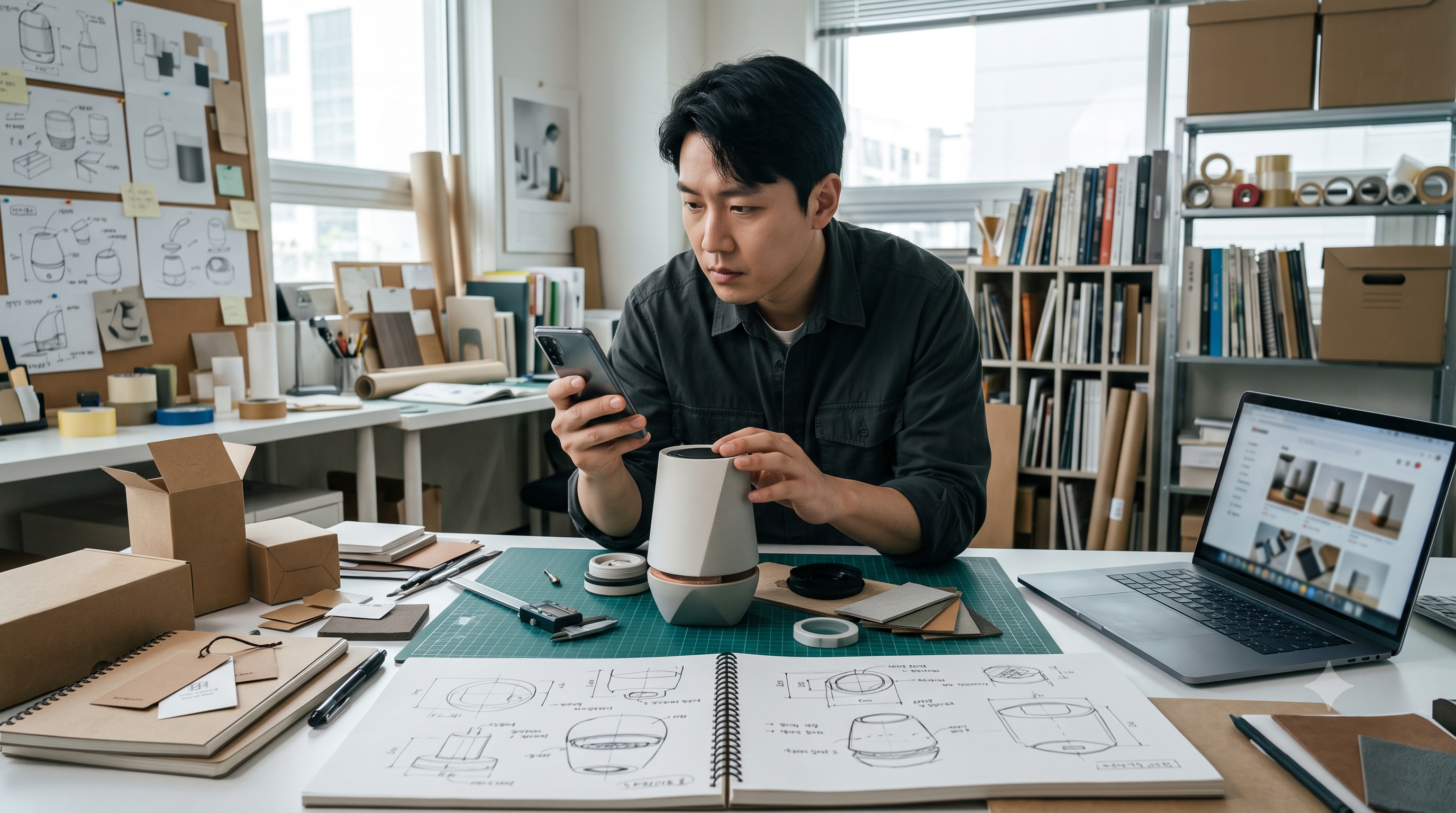
제품 사진을 인스타그램, 스마트스토어, 자사몰, 크라우드펀딩 페이지나 전시회에 먼저 공개했더라도 한국에서는 곧바로 디자인등록이 불가능해지는 것은 아닙니다. 현재 디자인보호법 제36조는 디자인등록을 받을 수 있는 권리를 가진 사람의 디자인이 공개된 경우, 그 공개일부터 12개월 이내에 출원하면 일정 범위에서 신규성 상실의 예외를 적용할 수 있도록 하고 있습니다. 2023년 12월 21일부터는 예외 적용을 위한 서류 제출 시기와 기한을 정하던 절차 규정도 삭제되어 종전보다 활용이 쉬워졌습니다.
다만 이것을 “공개 후 1년 동안은 아무 문제 없다”는 뜻으로 이해하면 위험합니다. 12개월은 출원을 미뤄도 되는 마케팅 유예기간이 아니라 이미 공개해 버린 경우를 구제하는 안전망에 가깝습니다. 공개 주체와 시점, 실제 공개된 디자인의 모습, 출원하려는 디자인과의 동일·유사성, 그 사이 제3자가 공개한 디자인, 해외출원 계획까지 함께 확인해야 합니다.
핵심 결론: 이미 공개했다면 먼저 “언제, 누가, 어떤 디자인을, 어디에 공개했는지”를 고정하고 12개월 만료일을 계산해야 합니다. 삭제하거나 비공개로 돌리는 것만으로 과거 공개 사실이 없어지는 것은 아니므로, 자료를 지우기보다 증거를 보존한 뒤 출원 가능성을 검토하는 편이 안전합니다.
왜 온라인에 올린 사진 한 장이 문제가 될 수 있을까요?
디자인등록의 출발점은 신규성입니다. 디자인보호법상 출원 전에 국내외에서 공지되었거나 공연히 실시된 디자인 등은 신규성 판단에서 선행디자인이 될 수 있습니다. 온라인 상품페이지는 검색·공유·캡처가 가능하고, SNS 게시물도 불특정 다수가 볼 수 있는 상태였다면 공개 자료로 문제될 수 있습니다.
실무에서는 “판매를 시작했느냐”만 보는 것이 아닙니다. 실제 판매가 한 건도 없더라도 제품 외관이 식별되는 사진이나 영상이 공개되었다면 검토가 필요합니다. 반대로 협력업체 한 곳에 비밀유지 조건으로 시제품을 보여준 것처럼 공개성이 인정되기 어려운 상황은 일반 공개와 다르게 평가될 수 있습니다. 그래서 게시물의 존재 자체보다 누가 접근할 수 있었고 무엇이 식별되었는지가 중요합니다.
온라인 공개에서 특히 자주 놓치는 자료는 다음과 같습니다.
- 인스타그램·유튜브·블로그의 최초 게시일과 수정 이력
- 스마트스토어·쿠팡·자사몰 상품페이지의 최초 노출 시점
- 크라우드펀딩의 사전공개 페이지와 본 펀딩 페이지
- 전시회 카탈로그, 부스 사진, 보도자료와 배포일
- 거래처에 보낸 공개형 카탈로그나 PDF의 발송일
- 제품 사진에서 실제로 보이는 전면·후면·측면·부분 형상
한국의 12개월 예외는 어떻게 작동하나요?
현재 디자인보호법 제36조는 디자인등록을 받을 수 있는 권리를 가진 사람의 디자인이 공개되어 신규성 문제가 생긴 경우, 그날부터 12개월 이내에 출원한 디자인에 대해서는 일정한 공개를 신규성 판단에서 제외할 수 있도록 규정합니다. 다만 조약이나 법률에 따라 국내외에서 출원공개 또는 등록공고된 경우에는 같은 방식으로 처리되지 않는 예외가 있습니다.
또한 2023년 개정으로 과거 제36조 제2항에 있던 신규성 상실 예외 주장 서류의 제출 시기와 기한에 관한 절차 규정이 삭제되었습니다. 당시 지식재산처는 이 개정을 권리자가 신규성 상실 예외를 보다 쉽게 적용받을 수 있도록 한 조치라고 설명했습니다. 관련 배경은 지식재산처의 디자인보호법 개정 안내에서 확인할 수 있습니다.
그렇다고 공개 사실을 정리하지 않아도 된다는 뜻은 아닙니다. 심사나 분쟁 단계에서 그 공개가 본인 또는 권리자로부터 나온 것인지, 언제 공개되었는지, 공개된 형상이 무엇인지가 쟁점이 될 수 있으므로 객관적 기록을 보존하는 것이 중요합니다.
12개월 계산은 ‘대충 작년 이맘때’가 아닙니다
예를 들어 2026년 1월 10일에 제품 외관을 처음 공개했다면, 그 날짜를 기준으로 법정기간을 검토해야 합니다. 그 후 3월에 더 선명한 사진을 올리고 5월에 변형 제품을 추가했다면 공개가 하나가 아니라 여러 개일 수 있습니다. 최초 공개와 각 후속 공개가 무엇을 보여 주었는지를 나눠 보아야 합니다.
제품군을 계속 수정해 온 경우에는 “우리 디자인을 언제 공개했나”라는 질문 하나로 끝나지 않습니다. 버전별 공개일, 형상 차이, 출원할 도면과의 관계를 타임라인으로 만들어야 합니다.
상황별로 판단이 달라집니다
| 상황 | 먼저 확인할 점 | 실무상 우선 행동 |
|---|---|---|
| SNS에 완성품 사진을 올림 | 최초 게시일, 공개 범위, 사진에 보이는 형상 | 캡처·URL·게시일 보존 후 즉시 출원 검토 |
| 쇼핑몰 판매를 이미 시작함 | 상품페이지 최초 노출일, 옵션별 디자인 | 판매내역과 페이지 이력 보존, 제품별 권리화 범위 점검 |
| 펀딩 티저만 공개함 | 티저에서 구체적 외관이 식별되는지 | 티저와 본 페이지를 각각 저장해 공개 정도 비교 |
| 전시회에서 시제품을 전시함 | 전시일, 촬영 허용 여부, 카탈로그 배포 | 전시 자료와 사진을 모아 공개 시점 확정 |
| 비밀유지계약 후 제조사에 전달 | 실제 비밀유지 의무와 접근자 범위 | NDA·이메일·전달기록을 보존하고 공개 여부 별도 판단 |
| 공개 후 디자인을 일부 변경함 | 변경점이 독립적인 창작인지, 선행 공개와 얼마나 유사한지 | 기본·변형 디자인을 함께 비교해 출원구조 설계 |
주의: 신규성 상실의 예외는 본인의 공개가 있었다는 이유만으로 모든 선행디자인을 없애 주는 제도가 아닙니다. 공개 전부터 존재하던 타인의 디자인이나, 공개 후 제3자가 독립적으로 공개한 자료가 별도로 문제가 될 수 있으므로 선행디자인 조사와 예외 검토는 서로 다른 작업입니다.
삭제하면 다시 ‘비공개 상태’가 되나요?
대부분의 경우 그렇게 생각하면 안 됩니다. SNS 게시물을 삭제하거나 상품페이지를 내렸더라도 이미 제3자가 보았거나 캡처·공유·캐시한 기록이 남을 수 있습니다. 법적 판단에서 중요한 것은 현재 검색되는지보다 과거 특정 시점에 공중에게 공개되었는지입니다.
따라서 출원 준비 중 가장 좋지 않은 대응 중 하나가 당황해서 자료를 모두 삭제하는 것입니다. 삭제로 과거 공개를 되돌릴 수 없으면서, 오히려 자신의 최초 공개 시점과 공개 내용을 입증할 자료를 잃을 수 있습니다. 우선 원본 사진, 게시일, URL, 화면 캡처, 판매·전시 기록을 보존하고 필요하면 플랫폼의 게시·판매 이력을 확보하는 편이 낫습니다.
해외 디자인출원을 생각한다면 더 빨리 움직여야 합니다
한국에서 12개월 예외가 있다고 해서 같은 공개가 모든 나라에서도 안전해지는 것은 아닙니다. WIPO도 산업디자인 보호는 국가·지역별 권리이며, 공개 후 출원을 허용하는 grace period의 존재와 기간이 국가별로 다를 수 있으므로 일반적으로 공개 전에 출원하는 것이 중요하다고 안내합니다. 자세한 기본 원칙은 WIPO 산업디자인 FAQ에서 확인할 수 있습니다.
따라서 미국, 유럽, 중국, 일본 등 해외 판매나 생산을 계획한다면 “한국에서 아직 12개월이 남았다”는 이유만으로 기다리지 않는 것이 좋습니다. 목표 국가, 최초 공개일, 한국 출원 여부, 우선권 및 헤이그 국제출원 가능성 등을 한 번에 검토해야 합니다.
특히 크라우드펀딩이나 해외 전시회는 공개와 해외시장 테스트가 동시에 일어나는 경우가 많습니다. 마케팅팀은 제품 반응을 먼저 보고 싶어 하고, IP 담당자는 출원일을 먼저 확보하고 싶어 합니다. 이 충돌은 공개 직전 출원 체크포인트를 프로세스에 넣는 것으로 줄일 수 있습니다.
출원 전에 준비하면 좋은 자료
이미 공개한 제품이라면 변리사에게 “사진을 올렸습니다”라고만 말하기보다 아래 자료를 한 번에 정리하는 것이 효율적입니다.
- 최초 공개 증거: 원본 게시물, URL, 게시일, 화면 캡처, 플랫폼 알림 메일
- 제품 버전별 자료: 렌더링, 사진, 도면, CAD 이미지, 시제품 변경 이력
- 판매·전시 자료: 최초 주문일, 상세페이지, 카탈로그, 전시 참가자료
- 권리관계: 디자이너가 직원인지 외주인지, 양도계약이 있는지, 공동창작 여부
- 해외 계획: 판매 예정 국가, 전시 일정, 바이어 미팅, 해외 펀딩 일정
- 앞으로 나올 변형안: 색상·형상·부품·패키지·GUI 등 후속 디자인 계획
여기서 중요한 것은 출원할 디자인을 실제 사업에서 어떻게 쓸 것인지입니다. 제품 전체만 등록할지, 모방 가능성이 높은 핵심 부분을 부분디자인으로 볼지, 후속 변형을 관련디자인으로 묶어 보호할지에 따라 준비 도면과 출원 순서가 달라질 수 있습니다.
흔한 실수 5가지
1. “판매 전이면 공개가 아니다”라고 생각하는 것
판매 여부와 공개 여부는 같은 질문이 아닙니다. 광고·SNS·전시·펀딩만으로도 외관이 공개될 수 있습니다.
2. 12개월을 남은 시간으로 소비하는 것
기간이 남았더라도 타인의 공개, 해외권리, 제품 변형이 계속 쌓일 수 있습니다. 알게 된 시점에 바로 검토하는 편이 안전합니다.
3. 최초 공개일만 기억하고 증거를 남기지 않는 것
나중에 계정이 삭제되거나 담당자가 퇴사하면 게시일과 원본을 찾기 어려울 수 있습니다.
4. 공개된 디자인과 출원 디자인이 다르다는 점을 무시하는 것
후속 버전이 있다면 각각의 차이를 분석해야 합니다. 한 번의 예외 주장으로 모든 변형이 자동 정리된다고 단정해서는 안 됩니다.
5. 한국 규칙만 보고 해외 판매를 결정하는 것
국가별 신규성·grace period 규칙이 다를 수 있습니다. 해외계획이 있으면 공개 전에 먼저 국가별 출원 순서를 설계하는 것이 원칙입니다.
가상사례로 보면 더 명확합니다
사례 A: 핸드메이드 조명 브랜드
창업자가 4개월 전 인스타그램에 신제품 조명을 올렸고, 지난달 스마트스토어 판매를 시작했습니다. 제품 외관은 거의 동일합니다. 이 경우 먼저 두 공개 시점과 게시물을 보존하고 한국 디자인출원에서 신규성 상실 예외 적용 가능성을 검토할 수 있습니다. 동시에 핵심 갓 부분을 별도 부분디자인으로 보호할 가치가 있는지도 살펴볼 수 있습니다.
사례 B: 펀딩 이후 해외 진출을 결정한 생활용품 회사
국내 펀딩에서 제품을 공개한 지 7개월 후 미국·유럽 진출을 결정했습니다. 한국에서의 12개월만 보고 기다리기보다 각 목표지역에서 선공개가 어떤 영향을 주는지 즉시 확인해야 합니다. 해외 보호가 중요했다면 원래는 펀딩 공개 전에 국내외 출원 로드맵을 잡는 것이 더 안전했습니다.
되돌리기 어려운 시점은 ‘12개월 마지막 날’이 아닙니다
실무적으로 가장 위험한 시점은 기간 만료 직전만이 아닙니다. 첫 공개 전에 해외권리 선택지가 줄어드는 순간, 공개 후 타인이 유사제품을 내놓는 순간, 내부에서 디자인 버전과 창작자 자료가 사라지는 순간이 모두 되돌리기 어렵습니다.
그래서 디자인 공개를 예정하고 있다면 “출시일”보다 앞선 내부 마감일을 두는 것이 좋습니다. 제품 촬영, 펀딩 심사 제출, 인플루언서 샘플 발송, 전시 카탈로그 인쇄 전에 IP 검토를 넣으면 불필요한 구제절차를 줄일 수 있습니다.
SKY 실무 관점: 공개 후 구제 가능성만 확인하는 데서 끝내지 말고, 제품 전체·부분디자인·관련디자인과 상표·특허를 함께 보아 “무엇을 먼저 확보해야 모방을 어렵게 만들 수 있는지”를 정리하는 것이 좋습니다.
지금 해야 할 다음 행동
이미 공개했다면 오늘 기준으로 공개 타임라인부터 만드십시오. 가장 오래된 공개일, 공개 주체, URL 또는 전시자료, 공개된 외관, 현재 판매 버전을 한 표에 넣으면 판단이 빨라집니다. 공개한 지 12개월에 가까워졌다면 내부 검토를 길게 끌기보다 출원 가능성과 도면 준비를 우선 확인해야 합니다.
아직 공개 전이라면 더 간단합니다. 공개 전에 출원일을 확보하는 원칙을 제품 출시 프로세스에 넣으십시오. 디자인의 전체·부분·변형 보호전략이 필요하다면 SKY 디자인 전략 서비스에서 검토 범위를 확인할 수 있습니다.
공식 출처
English Version
I Posted My Product Design Online Before Filing. Can I Still Register the Design in Korea?
If you already posted product photographs on Instagram, a Smart Store, your own website, a crowdfunding page, or displayed the product at an exhibition, design registration in Korea is not automatically lost. Article 36 of the Korean Design Protection Act provides a novelty grace mechanism for a design disclosed by the person entitled to obtain the design registration. In general, the application must be filed within 12 months from the disclosure for the exception to be available. Since December 21, 2023, the former procedural provision prescribing specific times and deadlines for submitting the grace-period assertion documents has also been deleted, making the mechanism easier to invoke than before.
That does not mean you have a safe one-year marketing window. The 12-month rule is better understood as a safety net after an accidental or business-driven disclosure, not a reason to postpone filing. You still need to identify who made the disclosure, when it happened, exactly what appearance was disclosed, how that appearance relates to the design you now want to file, whether third-party designs appeared in the meantime, and whether foreign protection is planned.
Bottom line: If disclosure has already occurred, fix the facts first: when, by whom, where, and what design was disclosed. Do not assume that deleting a post makes the historical disclosure disappear. Preserve the evidence and assess filing options before the 12-month period becomes a deadline crisis.
Why can a single online photograph matter?
Novelty is a basic requirement for design registration. A design that was publicly known or publicly worked before filing can become prior design material. An online product page can be searchable, shared, cached and captured. A social-media post may also matter when it was available to an unrestricted or sufficiently broad audience and showed the appearance of the product.
The issue is not limited to completed sales. Even if no unit was sold, a photograph or video that clearly reveals the product appearance may require analysis. By contrast, showing a prototype to one manufacturer under a genuine confidentiality obligation is not the same as a public posting. The practical question is therefore not simply whether a file existed online, but who could access it and what visual features could be identified.
Useful disclosure evidence commonly includes:
- the first posting date and edit history of an Instagram, YouTube or blog post;
- the first public date of a Smart Store, marketplace or company product page;
- a crowdfunding teaser page and the later full campaign page;
- exhibition catalogues, booth photographs, press materials and distribution dates;
- catalogues or PDFs distributed to customers or resellers; and
- the specific front, rear, side or partial features visible in the public images.
How does Korea’s 12-month exception work?
Current Article 36 of the Design Protection Act provides that when a design of the person entitled to obtain registration has become publicly disclosed in a way that would otherwise create a novelty issue, certain disclosures can be disregarded for novelty purposes if that person files within 12 months from the disclosure. The statute also contains an exception for publication or registration made under a treaty or law in Korea or abroad, so the rule should not be reduced to a blanket statement that every prior publication can be neutralized.
A 2023 amendment deleted the former procedural paragraph that prescribed the timing and deadlines for submitting the statement and supporting materials for the novelty exception. The Korean IP Office explained that the change was intended to make the exception easier for legitimate right holders to use. The legislative background is summarized in the Korean IP Office notice on the Design Protection Act amendment.
The deletion of those procedural timing rules does not make evidence irrelevant. In examination or a later dispute, you may still need to establish that the disclosure originated from the right holder, when it occurred and what design it showed. Keeping objective records remains important.
Do not calculate the 12 months as “around this time last year”
Suppose the first clear product image was posted on January 10, 2026. That date must be treated as a real legal fact, not an approximate memory. If a clearer set of photographs was posted in March and a modified version was introduced in May, there may be several relevant disclosures. The first post and each later version may show different features.
For a product family that changed over time, the question is not merely “when did we disclose our design?” Build a version-by-version timeline showing the disclosure date, the appearance revealed, and the relationship to the drawings you intend to file.
Different situations require different analysis
| Situation | What to verify first | Practical first step |
|---|---|---|
| Finished product posted on social media | First post date, audience, visible features | Preserve URL, screenshots and date; assess filing immediately |
| Online sales already started | First listing date and option-by-option designs | Preserve page and sales history; map protection by product |
| Only a crowdfunding teaser was shown | Whether the teaser reveals a specific appearance | Save teaser and full campaign separately and compare |
| Prototype displayed at an exhibition | Display date, photography access, catalogues | Collect exhibition records and establish disclosure date |
| Prototype sent to a manufacturer under NDA | Actual confidentiality duty and access scope | Preserve NDA, emails and transfer records; analyze publicity separately |
| Design modified after disclosure | Whether changes are independently creative and how similar versions are | Compare base and variants and design the filing structure |
Important: The novelty exception does not erase every earlier design in the world. Third-party designs existing before your disclosure, and independent third-party disclosures appearing later, can still create separate issues. Prior-design searching and the grace-period analysis are different tasks.
Does deleting the post restore secrecy?
Usually, no. A social-media post or product page may have been seen, captured, shared or cached while it was public. The legal question is whether the design was made publicly available at the relevant time, not merely whether it can still be found today.
One of the least helpful reactions is therefore to delete every record in panic. Deletion may fail to undo the disclosure while destroying evidence that proves your own earliest disclosure date and content. Preserve the original photographs, URL, posting date, screenshots, sales and exhibition records first. Where useful, obtain platform history before accounts or pages change.
Foreign design protection makes timing even more important
Korea’s 12-month rule does not make the same disclosure safe in every country. WIPO explains that industrial design rights are territorial and that grace periods after disclosure vary by jurisdiction; some systems allow a grace period, commonly six or 12 months, while the general safest practice is to file before public disclosure. See the WIPO Industrial Designs FAQ.
If the product may be sold or manufactured in the United States, Europe, China, Japan or other markets, do not wait simply because time remains under the Korean rule. Review the target countries, earliest disclosure, Korean filing, priority strategy and possible Hague international design filing together.
Crowdfunding and overseas exhibitions create a particularly common conflict: marketing wants market validation first, while IP protection benefits from a secured filing date first. A practical solution is to place an IP clearance checkpoint before public campaign materials, sample distribution and exhibition catalogues are released.
What should you prepare before filing?
If the product is already public, give your patent attorney a fact package rather than only saying “we posted it online.”
- Earliest disclosure evidence: original post, URL, date, screenshot and platform notification.
- Version history: renders, photographs, drawings, CAD images and prototype changes.
- Sales and exhibition records: first order date, product page, catalogue and exhibition materials.
- Ownership records: whether the designer was an employee, contractor or co-creator and whether assignments exist.
- Foreign plan: target countries, exhibition dates, buyer meetings and foreign crowdfunding schedule.
- Upcoming variants: color, shape, component, packaging and GUI variations.
The next question is how the design functions commercially. Should the entire product be filed, should a highly copyable feature be considered for partial-design protection, and should later variants be organized as related designs? Those choices affect drawings and filing sequence.
Five common mistakes
1. Assuming there is no disclosure until the first sale
Sales and public disclosure are different concepts. Advertising, social media, exhibitions and crowdfunding can reveal the design before any purchase occurs.
2. Treating the remaining 12 months as free waiting time
Even while the Korean period remains open, third-party disclosures, foreign-rights problems and additional product versions can accumulate.
3. Remembering the first disclosure but preserving no proof
Accounts may be deleted, pages edited and employees may leave. Capture reliable evidence while it is available.
4. Ignoring differences between the disclosed design and the filing design
A later version may need separate analysis. Do not assume one grace-period theory automatically resolves every variant.
5. Planning foreign sales only under Korean rules
Novelty and grace-period rules differ by jurisdiction. If foreign markets matter, build the filing order before disclosure whenever possible.
Two hypothetical examples
Example A: a handmade lighting brand
A founder posted a new lamp on Instagram four months ago and opened online sales last month. The appearance has remained substantially the same. The business should preserve both disclosure events and assess the Korean novelty exception promptly. It may also consider whether a visually distinctive lamp shade deserves separate partial-design protection.
Example B: a consumer-product company expanding abroad after crowdfunding
A company decides to enter U.S. and European markets seven months after revealing its product in a domestic crowdfunding campaign. It should not rely only on the remaining period under Korean law. It needs immediate jurisdiction-by-jurisdiction analysis of the earlier disclosure. Ideally, the international filing plan would have been set before the crowdfunding launch.
The difficult point is not only the last day of the 12 months
The most irreversible moment can occur much earlier: when foreign options narrow after first disclosure, when a competitor launches a similar product, or when internal evidence identifying the creator and design versions disappears.
A company that expects to launch a design-driven product should create an internal deadline before the marketing deadline. Put IP review before product photography, crowdfunding review submission, influencer sample shipment and exhibition catalogue printing. This is usually more efficient than relying on a rescue rule afterward.
SKY practice view: Do not stop at asking whether the past disclosure can be rescued. Review the whole product, partial designs, related variants and the combination of design, trademark and patent protection to determine what should be secured first to make copying harder.
What to do now
If the design is already public, create a disclosure timeline today. Put the oldest public date, person or company making the disclosure, URL or exhibition record, appearance shown and current commercial version in one table. If the 12-month point is approaching, prioritize filing feasibility and drawing preparation rather than extending internal discussions.
If disclosure has not happened yet, the rule is simpler: secure the filing date before public disclosure whenever possible. For a review of whole-product, partial and variant design strategies, see SKY’s Design Strategy service.